
Introduction — a shop floor moment, some numbers, and a simple question
I once stood beside a welding cell and watched the welder pause, lift his hood, and cough—nothing dramatic, just a small human pause. In automotive manufacturing welding fume extraction is often talked about as a checklist item, yet many plants still record particle counts above safe limits (we see that in some internal audits: up to 2–3 times the recommended exposure). So I ask: why do so many well-intended systems fail to keep the air truly clean? (this matters to workers, to quality, and to compliance) — and we will look at practical reasons next.
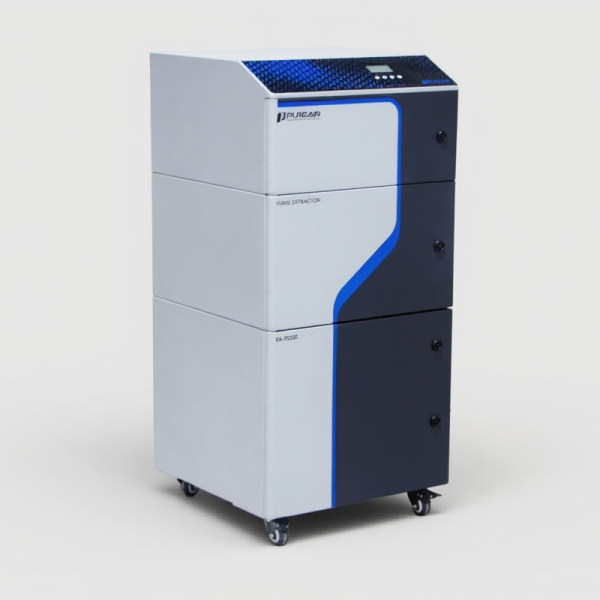
Here I share what I’ve learned over years on the line. I keep the language plain. I also include a few clear terms—extraction hood, HEPA filter, ductwork—so you can follow the core points. Let’s move into where the trouble really starts.
Part 2 — Why common fixes fall short (deeper layer: traditional solution flaws)
welding fume dust collector systems are sold as the answer. Yet I have seen units installed and forgotten. Filters load, pressure drop rises, fans struggle, and suddenly the whole balance is off. The common technical problems are simple but persistent: poor placement of extraction hoods, undersized ductwork, and filter media that clogs faster than expected. Filtration media choice matters. If you pick the wrong grade, you get high maintenance and worse capture efficiency. Look, it’s simpler than you think—proper hood capture and matched airflow beats oversized claims every time.
What exactly goes wrong?
First, I want to be direct: a system is only as good as its routine. HEPA filters stop fine particulates but demand frequent checks. Cyclone separators handle coarse dust but do little for nanoparticles. Many plants ignore air changes per hour (ACH) calculations and assume a bigger fan will fix it. That creates noise, higher energy use, and uneven capture. Also—funny how that works, right?—operators sometimes defeat hoods during tight-tolerance work because access is awkward. That defeats the whole point. And when monitoring is absent, you cannot catch drift in capture performance early, which is where edge computing nodes and remote sensors can help but are often omitted.
Part 3 — New principles and practical metrics for future-ready systems
Moving forward, I focus on principles that actually change outcomes. Modern designs mix improved capture geometry with smarter filtration and monitoring. A good plan layers solutions: effective extraction hoods that sit close to the arc, pre-separators like cyclone units for heavy particles, then high-efficiency filtration for fine fumes. Integrate sensors and simple edge computing to track pressure drop and particle count. A next-generation welding fume dust collector should not be a black box; it should tell you when a filter needs service, so you act ahead of failure.
What’s Next?
Here are three evaluation metrics I use when comparing options. First: capture efficiency at the hood—measure it rather than trust a datasheet. Second: system maintainability—how easy to swap filtration media and inspect ductwork. Third: operational transparency—do you get live data (pressure differential, particle counts) via simple displays or edge computing nodes? Use these to score vendors and setups. I admit I’m picky. I prefer realistic metrics to glossy promises. — well, listen, the difference shows up in lower downtime, lower energy bill, and fewer complaints.
To close, choose solutions that match real work conditions, not lab test rigs. Evaluate by capture, maintainability, and transparency. If you want a vendor to discuss practical deployment and monitoring, consider contacting PURE-AIR for examples and product details. I hope these points help you decide with confidence.